
The Curse of Knowledge.


I’m constantly frustrated when people speak and use technical terms, shorthand or acronyms that no one but them understands.
My children are always rolling their eyes when I ask what ttyl, ty or the other shorthand they use means. They call me old.
Anyway, I was sending a message to a friend recently and used an abbreviation and he replied saying what is that. I was almost annoyed that he is asking because I had gotten so used to using the acronym that it took me a minute to remember that he isn’t part of the usual circle that I use it with.
I said Ije now you are guilty of the same thing that you accuse people of.
What happened to me is what is called the curse of knowledge.
The curse of knowledge is a cognitive bias that occurs when a person assumes that the person(s) they are speaking to has the background knowledge to understand what they are saying.
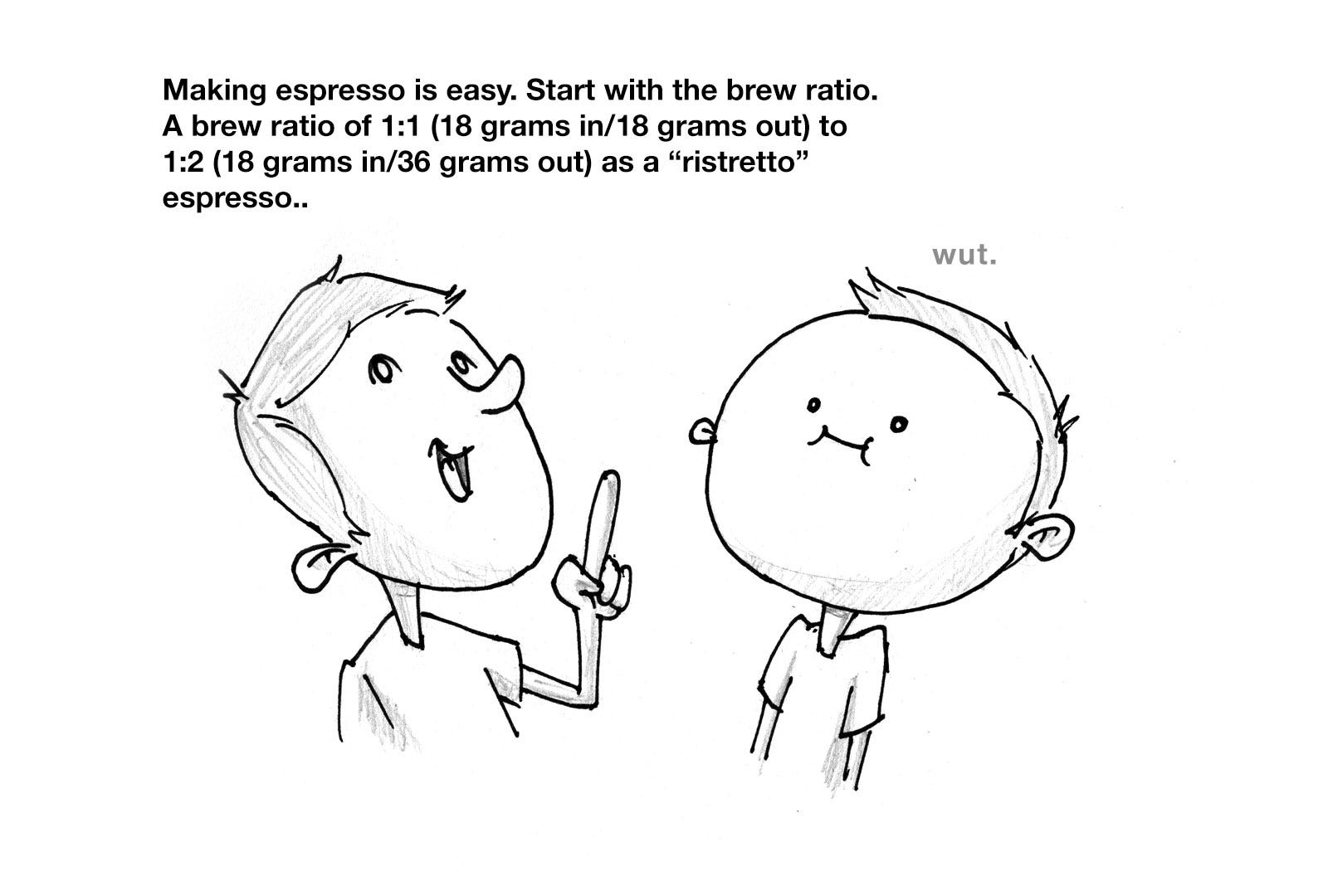
To demonstrate the Curse of Knowledge, Elizabeth Newton, a graduate student in psychology at Stanford in 1990, conducted an experiment known now as Tappers and Listeners.
She asked participants to tap out popular songs with their fingers (they are the “tappers”).
She asked the tappers to predict how many of those tapped melodies would be recognized and guessed correctly by the other group (the “listeners”).
In a sample of 120 melodies, listeners got it right only 2.5% of the time meanwhile, the tappers had predicted a 50% success rate.
They overestimated how well the listeners could guess because they, the tappers knew the songs they were tapping and the melody and assumed the “poor” listeners could too. In reality, all the listeners heard was a random series of taps.
It’s like when you ask someone to guess a song you are humming, and they have no idea because you are making incoherent noise while you think you are killing the tune.
The “curse” therefore is that when you know something, it’s almost impossible for you to unknow it. This then biases you into thinking that because it’s “normal” for you that it’s the same for others.
“When we are given knowledge, it is impossible to imagine what it's like to LACK that knowledge.” Chip Heath, Made to Stick: Why Some Ideas Survive and Others Die
What this “curse” means is that you end up not achieving whatever you set out to achieve with your communication.
You huff and puff for hours blowing plenty grammar and no one understands anything you have said.
A business might spend lots of money on a marketing campaign and it doesn’t translate into any material value because you have used language or a mode of delivery that your customers don’t understand or can’t relate to.
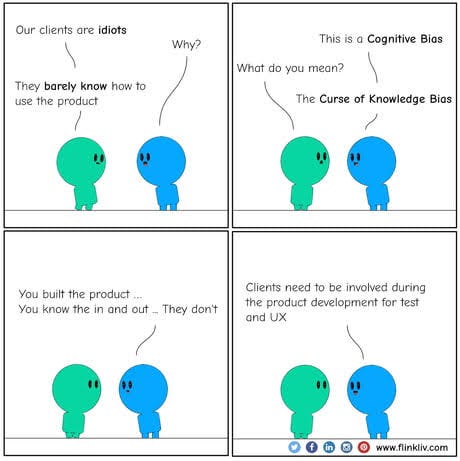
When businesses develop strategy/communication documents they use fluffy but “empty” buzzwords that mean absolutely nothing to the people (customers) they are trying to sell to.
Unless you are in an industry conference or communicating with peers, you should try to “cease and desist” from using important sounding words. Speak simple plain “LCM” (lowest common multiple) English.
Use this hack for any form of communication to avoid the curse of knowledge. First, ask the following questions:
who is the person I'm speaking to?
What is their level of understanding in relation to mine?
What could potentially be a barrier to achieving the desired outcome I desire? Some things will be beyond your control but being on the same level playing field communication-wise is something you can control.
Keep going,
Ije
when you know something, it’s almost impossible for you to unknow it. This then biases you into thinking that because it’s “normal” for you that it’s the same for others. The lesson I am taking from this piece is that I shouldn't expect people to know what i know and that it is okay not to know everything. Thank You Ije for sharing. I am looking forward to your next letter. Cheers